
Botanical Profile
Thottal Sinungi (Mimosa pudica / Lajjalu): The Botanical Wonder of Tamil Siddha and Ayurvedic Traditions
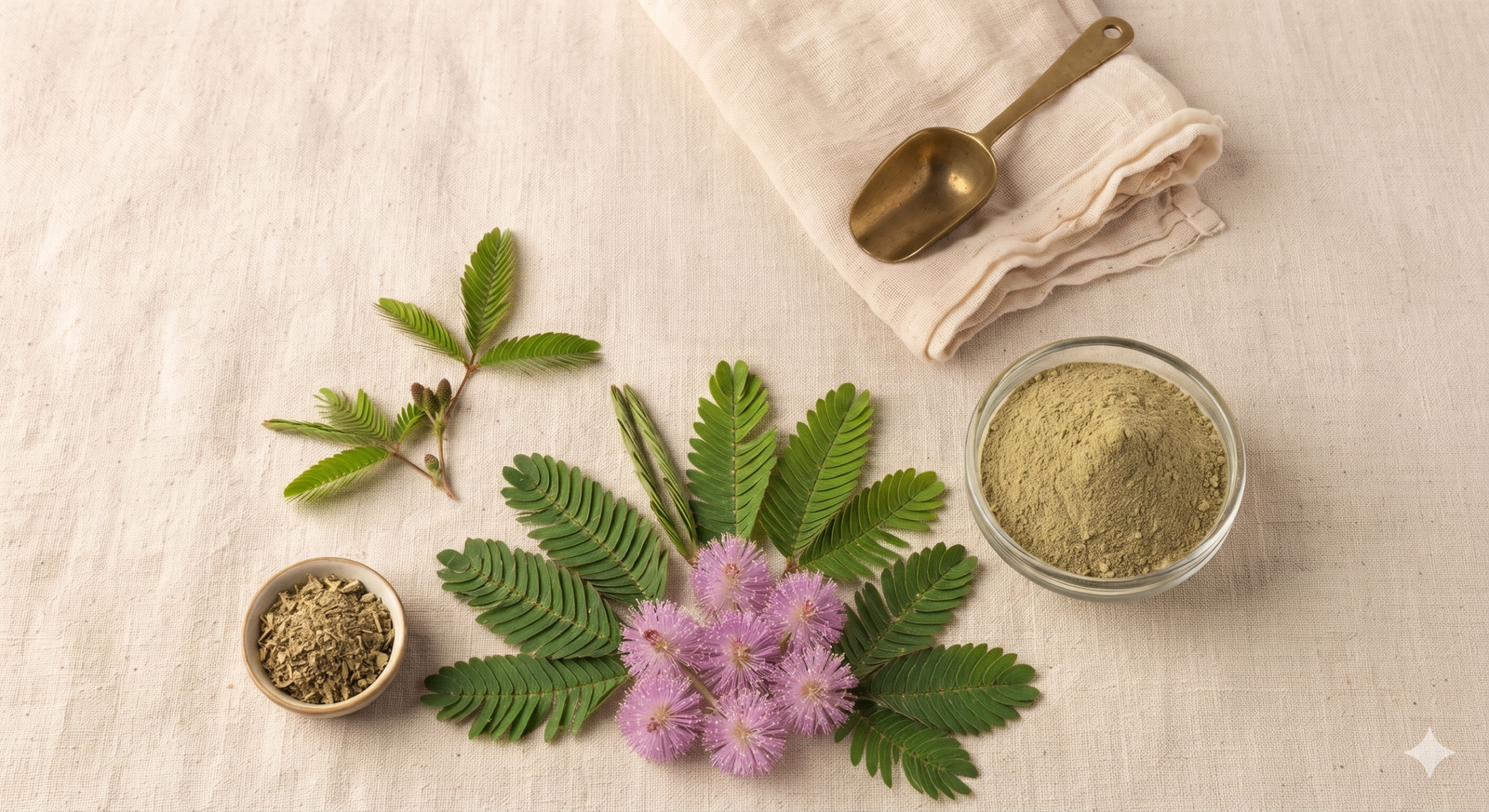
There are few plants in the natural world that evoke as much instant childhood wonder as Mimosa pudica. Walk through a damp field or rural path in southern India, brush a hand against its delicate, fern-like green clusters, and watch in fascination as the leaflets instantly curl inward, folding away in a protective, shy posture.
Known as Thottal Sinungi in Tamil (“the one that sulks when touched”), Lajjalu or Laajvanti in Ayurveda (“the shy one”), and universally recognized as the Touch-Me-Not or Sensitive Plant, this botanical marvel is far more than a passing curiosity.
Deeply embedded in the traditional wisdom of Tamil Siddha medicine and classical Ayurveda, Thottal Sinungi has long been valued for its unique properties. Brought to contemporary wellness routines through pure, single-ingredient formats like Yogis Herbs Thottal Sinungi Powder, let’s examine how this traditional herb bridges ancestral herbalism and modern holistic care.
Botanical Overview & Traditional Classification
In traditional Indian medicine, plants are understood through their elemental qualities, tastes, and post-digestive effects. Classical literature categorizes Mimosa pudica with specific characteristics:
- Botanical Name: Mimosa pudica L.
- Family: Fabaceae
- Tamil Name: Thottal Sinungi / Thotta Siningi
- Sanskrit / Ayurvedic Names: Lajjalu, Laajvanti, Namaskari, Samanga
- Primary Tastes (Rasa): Bitter (Tikta) and Astringent (Kashaya)
- Energetics (Virya): Cooling (Sheeta)
- Dosha Influence: Traditionally utilized to help pacify excess Pitta (internal heat) and Kapha
Sourced from clean environments where the whole plant is carefully harvested and milled into a fine, pure powder without additives or fillers, Thottal Sinungi preserves the complete botanical matrix relied upon by traditional practitioners.
Core Traditional Benefits & Modern Context
1. Digestive Comfort and Settling Internal Heat
Because of its cooling (Sheeta) energy and natural astringent profile, bitter herbs have historically been turned to when the body requires support for smooth, balanced digestion and internal comfort.
- Traditional Use: Traditionally, a small quantity (¼ to ½ teaspoon) is mixed into warm water, buttermilk, or honey as a supportive daily or evening ritual to help settle digestive friction.
2. Traditional Skin and Scalp Care
Beyond internal consumption, Thottal Sinungi has a rich lineage as an external folk application across Tamil Nadu.
- Traditional Use: The powder is traditionally blended with clean water to form a smooth, cooling paste. Applied topically as a soothing pack, it has long been valued for supporting skin clarity, comforting surface irritations, and maintaining a healthy scalp environment.
3. Natural Antioxidant Support
Modern phytochemistry has begun validating what ancestral herbalists observed empirically. Laboratory evaluations indicate that Mimosa pudica contains a diverse spectrum of bioactive constituents—including flavonoids, tannins, and active glycosides—which contribute to its natural antioxidant activity, helping protect cells from everyday oxidative stress.
Comparing Formats: Why Choose Whole Herb Powder?
When incorporating traditional herbs into a modern lifestyle, format matters:
| Feature | Whole Herb Powder (Pure & Wildcrafted) | Processed Extracts / Formulations |
|---|---|---|
| Composition | 100% pure Mimosa pudica whole herb, nothing added | Often mixed with excipients, binders, or standardized extracts |
| Versatility | Can be consumed internally or mixed into external pastes | Usually restricted to capsule or tablet ingestion |
| Tradition Match | Directly aligns with traditional Siddha and Ayurvedic preparation methods | Modern adaptation optimized primarily for convenience |
Frequently Asked Questions
- Is Yogis Herbs Thottal Sinungi Powder 100% pure?
Yes. Our powder is crafted from wildcrafted Mimosa pudica whole herb with no artificial fillers, binding agents, or preservatives, adhering strictly to international export and safety standards. - How is it traditionally consumed?
The standard traditional approach involves stirring ¼ to ½ teaspoon of the powder into warm water, milk, or honey, consumed once daily or as directed by a qualified herbal practitioner. - Can it be used externally?
Yes, it can be mixed with water to form a paste for traditional skin and scalp applications. Always perform a patch test first. - Are there any contraindications?
As a potent natural herb with cooling and astringent properties, Thottal Sinungi is traditionally not recommended during pregnancy or breastfeeding. Individuals with underlying health conditions or those on active medication regimens should consult a healthcare professional before use.
Experience Pure Thottal Sinungi Powder
Processed under GMP-certified conditions in Pollachi, Tamil Nadu. 100% pure wildcrafted whole herb powder, traditionally prepared for your wellness routines.
Shop Thottal Sinungi Powder Browse all herbsFinal Thoughts
Nature frequently hides some of its most fascinating botanical gifts in plain sight—such as a resilient wild herb that curls away at the lightest touch. By integrating traditional Tamil Siddha and Ayurvedic wisdom with rigorous, clean manufacturing standards, adding Thottal Sinungi powder to your wellness routine offers a meaningful connection to time-tested herbal heritage.