
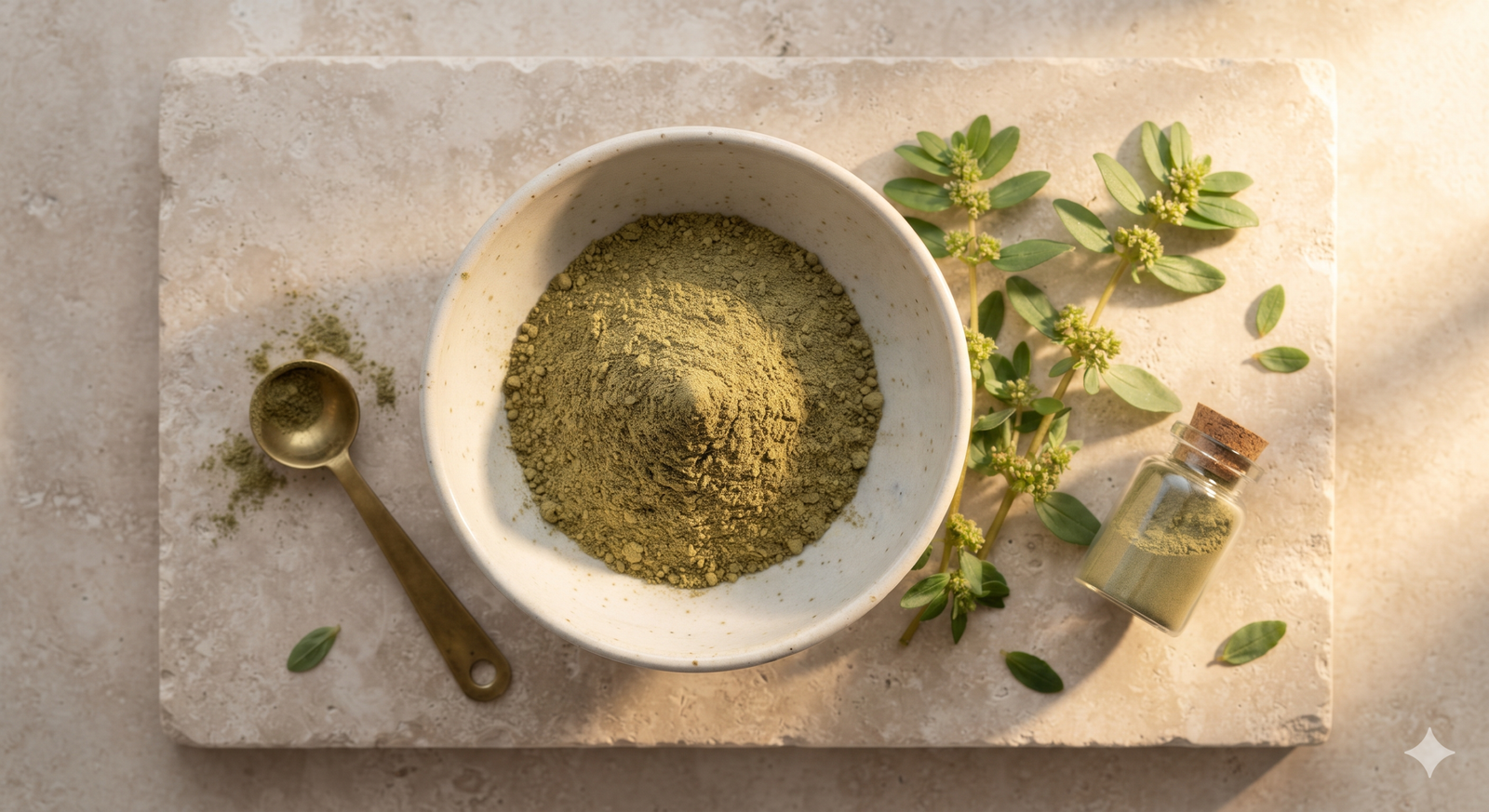
Botanical Profile
The Goddess’s Grains of Rice: Exploring the Heritage and Respiratory Wisdom of Amman Pacharisi
Few traditional herbs carry a name as poetic as Amman Pacharisi—literally translated in Tamil folklore as the “Goddess’s raw rice.” Growing unbidden along courtyard edges and rural pathways across South India, this humble wild green has been quietly brewed in village kitchens for generations.
Known botanically as Euphorbia hirta and widely recognized around the world as the Asthma Plant or Dugdhika, Amman Pacharisi holds an esteemed place in Tamil Siddha traditions. Long before modern supplements existed, it was the trusted household green turned to for natural support during changing, damp seasons.
A Heritage of Respiratory and Airway Comfort
Amman Pacharisi is most famously celebrated in traditional Siddha practice for supporting respiratory ease. During damp monsoons and seasonal transitions when air passages feel heavy, traditional practitioners relied on simple whole-herb decoctions—often referred to as teas—to encourage comfortable breathing and airway relaxation.
Modern phytochemistry confirms that the plant contains a rich spectrum of active bio-compounds, including flavonoids (such as quercetin and rutin), phenolic acids, and saponins, which contribute to its soothing, antioxidant-rich profile.
Core Traditional Benefits & Modern Wellness Applications
1. Respiratory Support & Seasonal Ease
Traditionally brewed as an earthy, caffeine-free infusion or taken in pure whole-herb powder formats, Amman Pacharisi supports upper respiratory comfort and helps maintain clear, relaxed breathing during seasonal shifts.
2. Digestive Comfort and Gut Harmony
In traditional Siddha herbalism, bitter and astringent herbs like Amman Pacharisi are valued for encouraging smooth digestion, easing mild abdominal tension, and maintaining a balanced internal rhythm.
3. Natural Antioxidant Defense
Laboratory evaluations of Euphorbia hirta highlight significant free-radical scavenging activity, reinforcing its traditional reputation as an everyday botanical tonic that helps protect cells from oxidative stress.
4. Traditional Folk Care Traditions
Historically, various parts of the fresh plant—including its milky latex—were utilized in localized rural practices for topical skin soothing and surface comfort. In modern wellness routines, the focus centers cleanly on pure, internal whole-herb support.
Experience Pure Amman Pacharisi
Available in wildcrafted whole-herb tea cut bags and pure capsule formats. Processed under GMP-certified conditions in Pollachi, Tamil Nadu.
Shop Amman Pacharisi Browse all herbsHow to Enjoy Amman Pacharisi in Modern Routines
Integrating Amman Pacharisi into your lifestyle is simple and grounding:
- Whole-Herb Infusions (Tea): Steep clean, wildcrafted Amman Pacharisi dip bags in hot water for 5 to 7 minutes to enjoy a mild, earthy, caffeine-free wellness cup.
- Pure Powder or Capsules: Take pre-measured botanical capsules or mix clean whole-herb powder into warm water as directed by your wellness routine.
Final Thought
Amman Pacharisi reminds us that profound herbal wisdom often grows right outside our door. By bringing this cherished Tamil courtyard plant into clean, modern formats, we preserve an unbroken lineage of natural respiratory and everyday wellness care.