
Botanical Profile
Mudakathan: The Traditional Vine for Joint Comfort, Mobility and Culinary Wellness
Traditional Indian botanical systems have long recognized the deep connection between daily nutrition and physical well-being. Passed down through generations in Siddha and Ayurvedic practice, everyday plants were integrated seamlessly into home life to support vitality and ease.
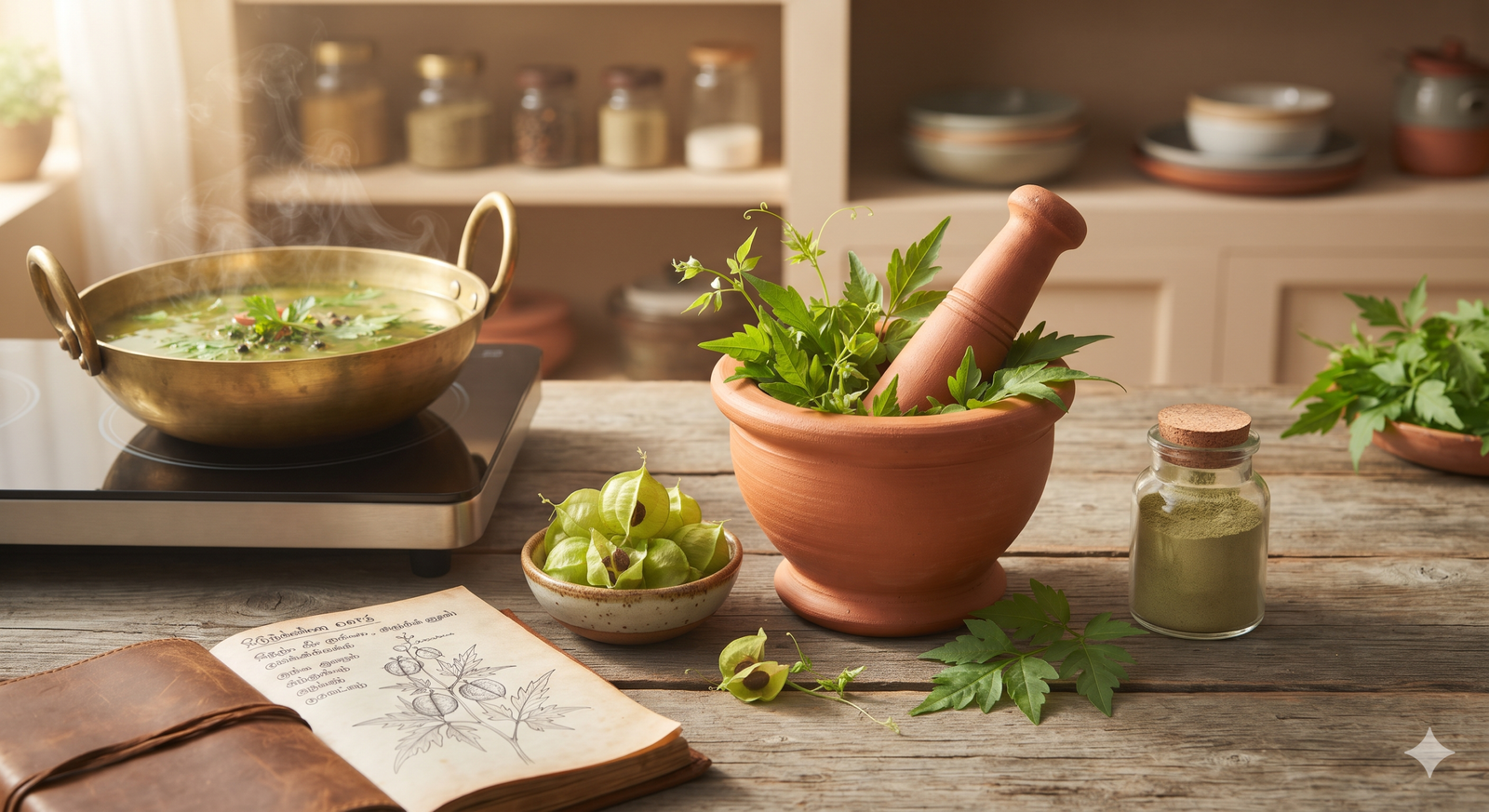
One such remarkable plant is Mudakathan Keerai, botanically identified as Cardiospermum halicacabum and widely known as the **balloon vine**. Found growing naturally along the peripheries and rural pathways of Tamil Nadu, this climbing vine is easily recognized by its delicate balloon-like seed pods. In traditional village practice, the leaves and tender shoots have long been valued for supporting physical flexibility and joint comfort.
Supporting Joint Comfort and Physical Mobility
Mudakathan has a long-standing reputation in traditional herbal care for supporting joint ease and structural flexibility. Traditionally, households utilized both external leaf preparations (such as infused herbal oils) and internal culinary blends to encourage comfortable movement and soothe everyday bodily stiffness.
Rather than acting as a quick fix, this dual approach—combining topical comfort with nutrient-rich dietary routines—exemplifies the balanced philosophy of traditional South Indian wellness.
A Heritage of Household Care
Across generations of Tamil households, Mudakathan earned a trusted place in domestic care routines:
- Respiratory Support: Traditionally used in warming household broths and herbal steams during seasonal shifts to encourage clear breathing and throat comfort.
- Postpartum & Abdominal Comfort: Historically, ground leaf pastes were applied externally or incorporated into traditional postpartum routines to support recovery and physical comfort.
- Digestive Ease: Valued in mild herbal preparations to support smooth digestion and maintain an easy internal rhythm.
Unave Marunthu: Mudakathan in the Kitchen
What makes Mudakathan truly special is that it was never restricted to the apothecary; it found a natural home in the kitchen. In Tamil culinary tradition, food is medicine (*Unave Marunthu*), and this nutrient-rich green was easily woven into everyday meals:
- Mudakathan Dosai: Blending leaf powder directly into fermented dosa batter adds an earthy flavor and wholesome nutrition to breakfast.
- Rasam & Soups: Simmering the powder with peppercorns, cumin, and garlic creates a warming, spiced rasam that acts as a comforting culinary tonic.
- Traditional Thuvaiyal: Ground into stone-pounded chutneys served alongside steamed rice, it offers both rich flavor and botanical goodness.
Experience Pure Mudakathan Powder
Processed under GMP-certified conditions in Pollachi, Tamil Nadu. 100% pure shade-dried leaf powder, traditionally prepared for your daily culinary routines.
Shop Mudakathan Powder Browse all herbsWhy Mudakathan Still Matters Today
In modern life, maintaining joint comfort and physical flexibility while managing daily sluggishness is a universal priority. Mudakathan offers a bridge to an older, steadier way of caring for the body—one where wholesome nutrition and active botanical support work hand in hand.
Final Thought
Mudakathan is a shining example of how traditional wisdom kept wellness close to home. By transforming a wild climber into a staple of daily cooking and self-care, our ancestors ensured that physical support remained as simple and nourishing as a family meal.
Very useful
thanks for this tips i have regular is this…