
Culinary Medicine Heritage
Long before modern wellness popularized bone broths, adaptogenic tinctures, and synthetic multivitamin tablets, kitchens across South India practiced an effortless daily ritual of functional nourishment: they drank their herbs directly from the cooking pot.
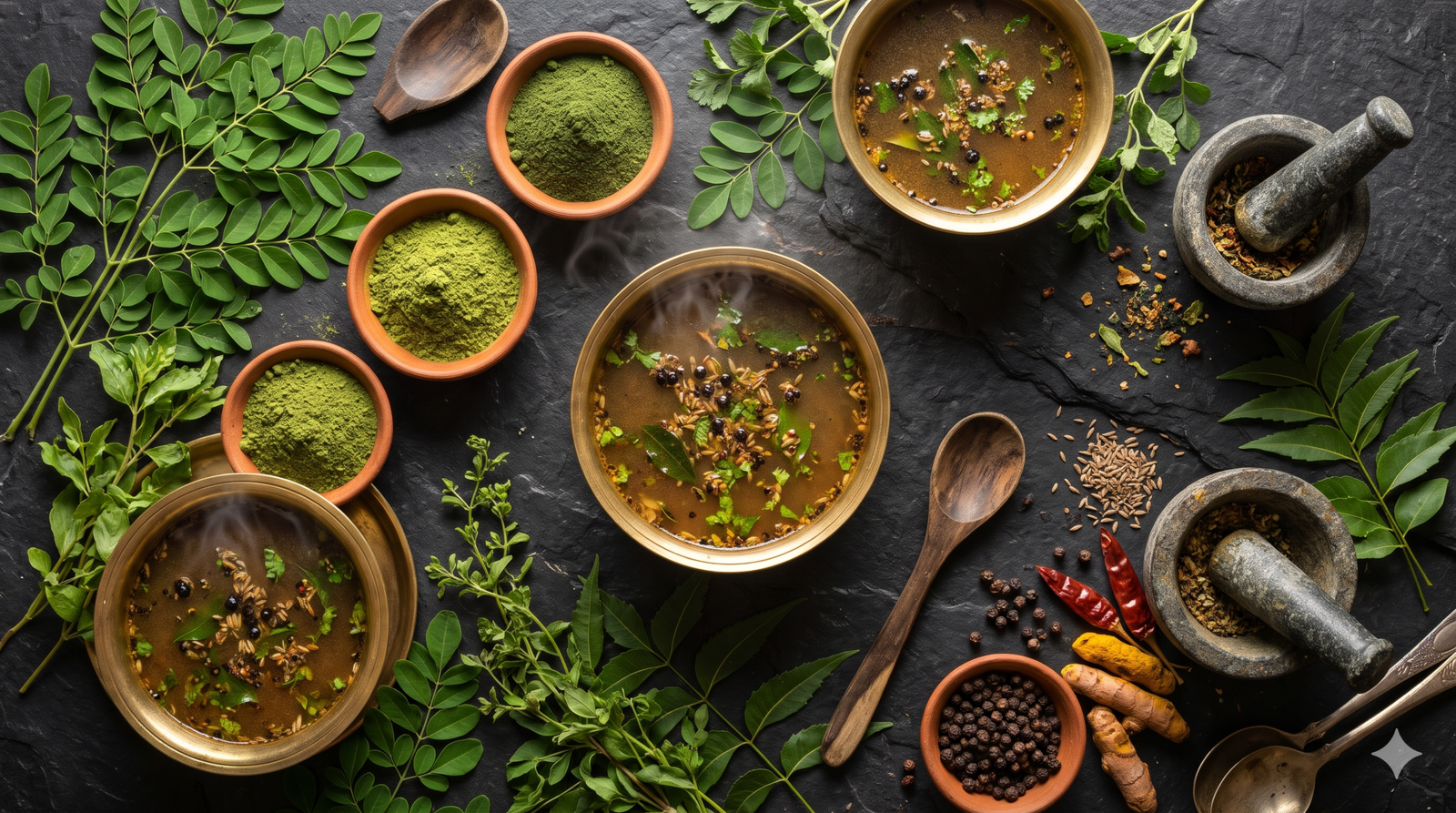
Known across Tamil Nadu as Rasam (and in neighboring regions as Saaru or Charu), this steaming, translucent herbal broth is an indispensable staple of the traditional midday meal. To the uninitiated, it looks like a simple aromatic soup spiced with crushed peppercorns, cumin, and tamarind. To the classical physician, however, it represents something far more profound: a masterclass in botanical pharmacokinetics disguised as home cooking.
In traditional households, when the season turned wet, the voice turned raspy, or digestion slowed down, families rarely reached for an apothecary pill. Instead, a handful of freshly harvested bitter leaves or sun-cured root powders was tossed directly into the simmering broth. Understanding why this culinary tradition works reveals why food—not isolated capsules—remains the most intelligent delivery system for herbs.
The Pharmacological Logic of the Broth
Why did traditional healers choose a hot, acidic, spiced liquid over dry powders or cold water? The answer lies in how our digestive tracts absorb active plant compounds:
- The Piperine Multiplier (Bioavailability): Every pot of authentic Rasam is anchored by freshly crushed black pepper (*Piper nigrum*). Modern pharmacology has confirmed what Siddha physicians knew through centuries of observation: piperine significantly inhibits intestinal glucuronidation, dramatically increasing the absorption rate of co-ingested plant nutrients and flavonoids.
- Thermal Hydro-Extraction: Simmering bitter leaves—such as Thoothuvalai, Adathodai, or Musumusukkai—in hot water gently breaks down tough plant cell walls, drawing out water-soluble tannins, minerals, and polyphenols into an easily assimilable liquid form that doesn’t overtax sluggish digestion.
- Lipophilic Delivery via Ghee: The finishing touch of any authentic broth is the *tadka* (tempering): mustard seeds and cumin bloomed in a teaspoon of warm grass-fed ghee. These healthy dietary fats bind to lipophilic (fat-soluble) botanical resins and volatile aromatic oils, ensuring smooth cellular uptake.
“In traditional Tamil wisdom, the kitchen and the medicine cabinet were never separated. Rasam was not medicine you were forced to swallow; it was comforting warmth served over steaming rice at the family table.”
Four Traditional Botanicals Transformed by the Pot
While an everyday rasam relies on cumin, pepper, and garlic, traditional cooks customized the pot according to immediate household needs:
1. Thoothuvalai (Solanum trilobatum) — The Singer’s Clear Throat
With its sharp thorns and bitter bite, raw Thoothuvalai leaves can be intimidating. Simmered in a peppery rasam, however, its natural warming energy (*Ushna Virya*) and pungent alkaloids dissolve into the broth, clearing chest heaviness, soothing irritated vocal cords, and melting seasonal congestion.
2. Sukku (Sun-Cured Dry Ginger) — Digestive Fire Starter
Known as the universal medicine (*Vishwabhesheja*), dried ginger differs fundamentally from fresh ginger. In the slow heat of a broth, dry ginger promotes gastric juices, dispels abdominal bloating, and counters the lingering internal dampness brought on by cold drafts.
3. Musumusukkai (Mukia maderaspatana) — The Gentle Demulcent
This wild climbing vine is naturally mucilaginous. Prepared as a clear broth, it coats scratchy, dry throats while providing gentle bitter stimulation to encourage gut motility and calm excess flatulence.
4. Murungai (Moringa oleifera) — Whole-Food Mineral Vitality
Fresh or dried moringa leaves cooked into a light lentil-broth base infuse the liquid with organic calcium, plant iron, and antioxidants—turning a simple dinner into a potent restorative tonic for tired bodies.
The Authentic Herbal Rasam Ritual: A Kitchen Recipe
You do not need access to rural South Indian markets to experience this ancestral ritual. Using pure shade-dried botanical powders, you can brew a functional, deeply comforting herbal broth in 15 minutes:
The 15-Minute Home Herbal Broth
The Spiced Botanical Base:
- 1 teaspoon whole black peppercorns + 1 teaspoon cumin seeds (coarsely crushed)
- 3 cloves fresh garlic (crushed with skin on)
- 1 small ripe tomato (mashed by hand)
- 1 teaspoon pure botanical powder (choose Thoothuvalai for throat comfort, or Sukku for digestion)
- ½ teaspoon turmeric powder + a pinch of natural sea salt
- 300ml fresh water + a small marble-sized piece of tamarind (or a squeeze of lemon at the end)
The Simple Method:
- In a small stainless steel or clay pot, combine the crushed pepper, cumin, garlic, mashed tomato, botanical powder, turmeric, and water.
- Simmer gently on low heat until the liquid turns deeply aromatic and a light foam gathers across the surface (do not let it roll-boil excessively).
- In a tiny ladle, heat 1 teaspoon of ghee with a pinch of mustard seeds and a sprig of fresh curry leaves until they crackle; pour this sizzling oil directly over the broth.
- Cover immediately for 2 minutes to trap the aromatic essential oils. Sip warm from a ceramic mug, or pour over steaming white rice.
Pure Single-Ingredient Powders from Our Apothecary
At YOGIS HERBS, we process our herbs with zero artificial excipients, ensuring they retain their culinary integrity and aromatic potency just as nature intended:
Thoothuvalai Powder
100% pure Solanum trilobatum leaf powder. The quintessential choice for simmered herbal rasams, seasonal throat soothing, and chest clarity.
Sukku Kashayam Blend
Traditional dry ginger, coriander, and black pepper infusion. Designed for instant digestive warmth, post-meal lightness, and evening relaxation.
Rethinking the Way We Nourish
Modern supplement culture has taught us to view wellness through the lens of clinical isolation: a plastic bottle, a glass of water, and an uninspiring capsule swallowed in a hurry. But traditional cultures understood that when herbs are tasted, warmed, and enjoyed as part of the daily culinary table, the body receives them not as an intrusion, but as welcomed nourishment.
The Rasam ritual reminds us of this forgotten wisdom: true preventative wellness doesn’t need to feel clinical. Sometimes, the most enduring herbal medicine is simply a warm, steaming bowl crafted with intention in your own kitchen.
Culinary Tradition & Educational Disclaimer: This article is authored for traditional culinary appreciation and educational purposes only. These statements have not been evaluated by the US FDA, FSSAI, or EFSA. Botanical preparations are intended as functional dietary additions and are not formulated to diagnose, treat, cure, or prevent any illness. If you have specific dietary sensitivities, gallstones, gastrointestinal ulcerations, or are pregnant, consult a qualified health provider before incorporating strong warming spices into your daily regimen.