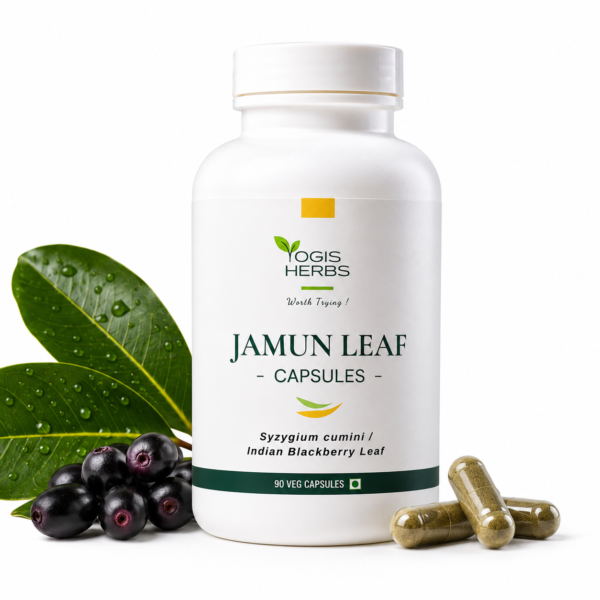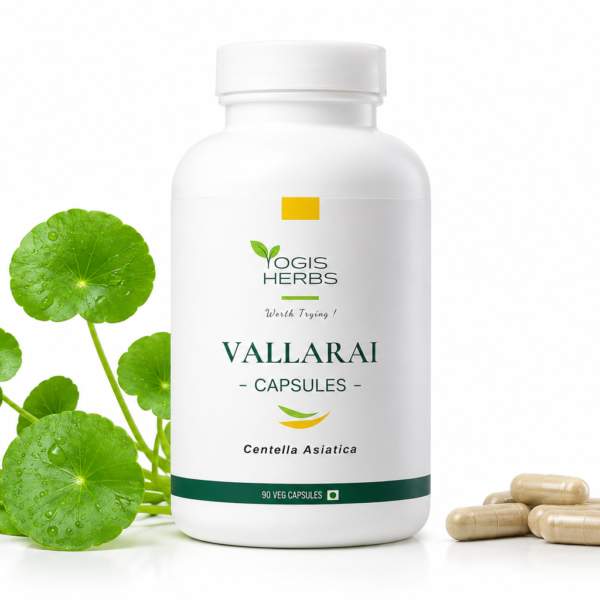
What is it
Thoothuvalai — Solanum trilobatum, a thorny purple-flowered nightshade creeper of the South Indian hedgerow — holds a rare place in Siddha medicine: it is counted among the kayakalpa herbs, the rejuvenatives the Siddhars prized for restoring vitality and slowing the wear of age. Sanskrit knew it as Alarka. For centuries it has been the everyday breath-and-vitality green of the Tamil home — cooked into rasam, thuvaiyal and dosai through the cough-prone months, and formalised in classical Siddha preparations like Thoothuvalai nei and Thoothuvalai mathirai. We take the whole herb, cleaned and milled single-ingredient into a vegetarian capsule — the Siddha rejuvenator, made effortless.
What Makes This Different
- Whole herb, single ingredient. One hundred percent Solanum trilobatum powder — no fillers, binders, flow agents or extract dilution. No additives.
- The whole plant, as Siddha uses it. Siddha and the Tamil kitchen use the whole thorny green; we use the whole herb, and say so.
- The rasam green, made simple. Thoothuvalai is the leaf you’d simmer into a cough-season rasam; the capsule delivers the clean herb, ready.
- Certified base: FSSAI Central Licensed, GMP compliant, ISO 22000.
What It Does
- The Siddha kayakalpa herb. Siddha tradition counts Thoothuvalai among its kayakalpa herbs — the rejuvenatives believed to restore vitality and steady the body against the wear of age.
- A traditional herb for the breath. For centuries Thoothuvalai has been Siddha’s everyday green for clear, comfortable breathing — brewed into rasam and decoctions through damp, cough-prone seasons, and named in classical formulations like Thoothuvalai nei.
- Naturally antioxidant-rich. Laboratory studies record antioxidant activity in the herb, tied to its flavonoids (including quercetin) and other compounds (in vitro).
- A green woven into daily life. More food than medicine in the Tamil home, Thoothuvalai is eaten as rasam, thuvaiyal and dosai — everyday nourishment and everyday breath.
- Emerging angle — its steroidal alkaloids. Thoothuvalai’s signature compounds, the steroidal glycoalkaloids solasodine and sobatum, are an active area of laboratory research (in vitro).
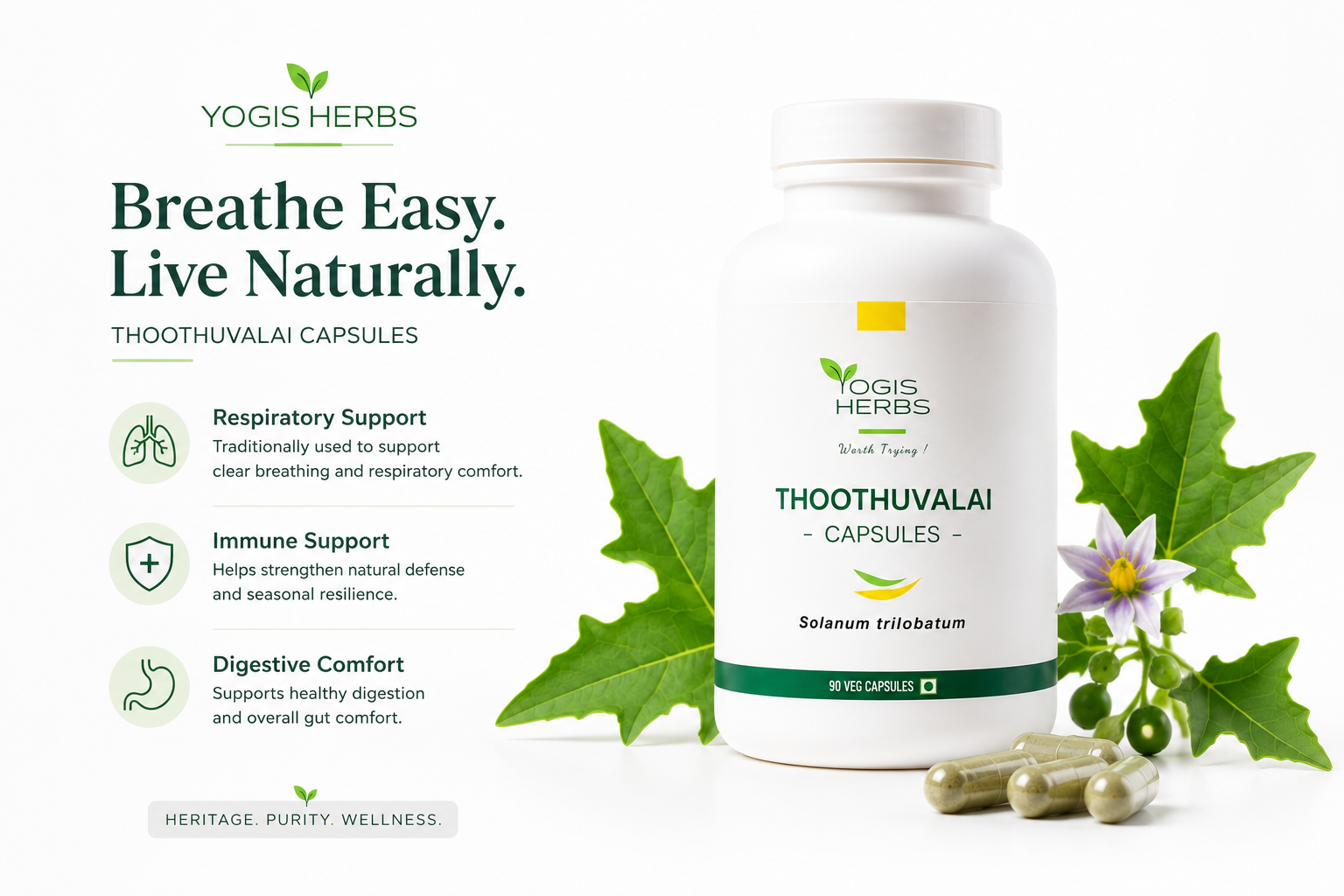
Thoothuvalai — The Herb the Siddhars Called Kayakalpa
The Siddhars — the sage-physicians of the Tamil land — held a special word for the herbs that could renew the body and hold age at bay: kayakalpa, “transformation of the body.” Few plants earned the name. This thorny little nightshade, Thoothuvalai, was one of them — at once the everyday green simmered into a cough-season rasam and, to the Siddhars, a rejuvenator worthy of their highest category. The humble hedgerow creeper that tradition set beside the herbs of long life.
How to Take It
Take one veg capsule twice daily with water, after food, or as directed by a healthcare professional. In keeping with tradition, Thoothuvalai is enjoyed as an everyday green, especially through damp and changing seasons. Best taken steadily, and not exceeding the suggested amount. If you are pregnant or breastfeeding, giving it to a child, or taking prescription medication, consult a healthcare professional before use.
Disclaimer
Yogis Herbs Thoothuvalai Capsules are a herbal food supplement, not a medicine, and are not intended to diagnose, treat, cure or prevent any disease. Those who are pregnant or breastfeeding, children, and anyone on medication should consult a healthcare professional before use. These statements have not been evaluated by the Food and Drug Administration. Individual results vary; enjoy as part of a balanced diet and healthy lifestyle.
References
- Solanum trilobatum L. — a review. Researchgate. Review. Documents the whole plant’s traditional Siddha use and its inclusion in official Siddha formulations (Thoothuvalai nei, Thoothuvalai mathirai, Aadhadodai churanam) per the Siddha Formulary of India, and its use as a food green in South India. https://www.researchgate.net/publication/358850822
- Extraction and Phytochemical Screening of Solanum trilobatum Leaves. IJEDR. In vitro (leaf). Screening of the shade-dried leaf identified alkaloids, flavonoids, tannins, saponins and glycosides. https://rjwave.org/ijedr/papers/IJEDR2601566.pdf
- Solanum trilobatum in the management of atopy… PMC3140120. In vitro / animal. Documents the plant’s antioxidant activity and its Sanskrit name, Alarka. https://pmc.ncbi.nlm.nih.gov/articles/PMC3140120/
- A perspective on bioactive compounds from Solanum trilobatum (2015). Researchgate. Review. Documents the plant’s phytochemistry — solasodine, sobatum, tomatidine and quercetin — and its antioxidant activity. https://www.researchgate.net/publication/281407363