
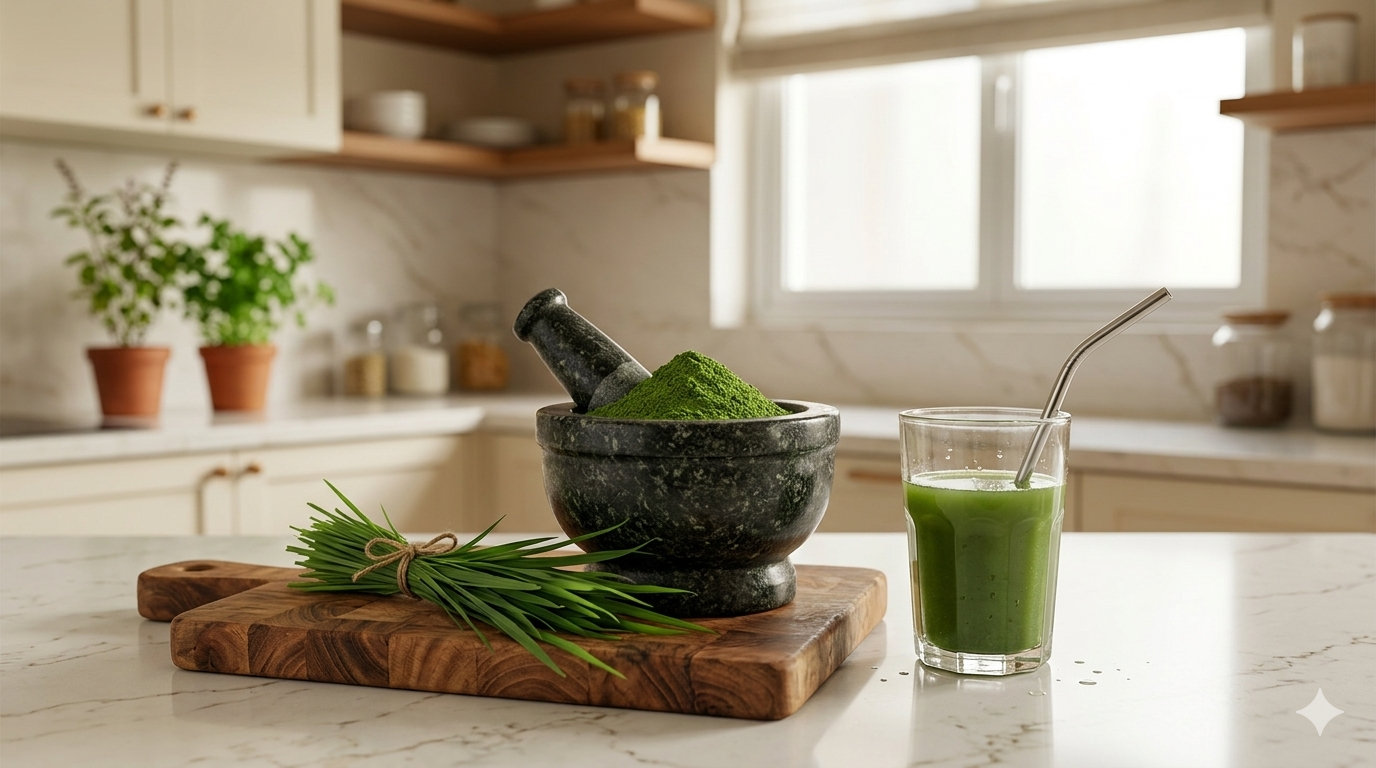
Botanical Profile
Arugampul: The Sacred Grass of Tamil Tradition and Its Timeless Wellness Benefits
Few plants are as ubiquitous across the Indian landscape as Arugampul. It carpets pathways, withstands scorching tropical heat, and revives after prolonged droughts at the first touch of rain.
Known in Western taxonomy as Bermuda Grass and celebrated in classical Sanskrit literature as Durva, Cynodon dactylon is not a casual lawn weed. In Tamil traditional wellness and classical Ayurvedic practice, it is revered as a foundational botanical for cooling internal heat, supporting metabolic detoxification, and restoring cellular equilibrium.
Sacred rituals across the subcontinent offer fresh sprigs of Durva to invoke resilience and vitality. Traditional physicians recognized that same resilient vitality within human physiology: a gentle, nutrient-dense grass capable of alkalizing the system and calming bodily fire without depleting strength.
The “Green Blood” of Botanical Heritage
In South Indian domestic tradition, waking up to a fresh glass of Arugampul juice was long considered an essential morning cleansing ritual. Ethnobotanists and traditional healers frequently refer to it as “plant blood” due to its exceptional concentration of pure chlorophyll, whose molecular structure closely mirrors human hemoglobin.
Modern lifestyle patterns—characterized by chronic stress, processed diets, caffeine consumption, and environmental pollution—frequently push internal physiology toward acidic stagnation and excess metabolic heat (Pitta). Arugampul functions as a potent natural alkalizer, restoring constitutional balance from the foundation up.
“Arugampul teaches a fundamental lesson in herbal wisdom: true rejuvenation does not require rare mountain exotics. The most resilient healing power is often found in the quiet grass beneath our feet.”
Four Traditional Pillars of Arugampul Wellness
1. Cooling Pitta and Easing Internal Acidity
With its cooling energy (Sheeta Virya) and sweet-astringent taste, Arugampul is a classical remedy for pacifying aggravated Pitta. It helps soothe gastrointestinal heat, reduce burning sensations, and calm acid reflux following rich or irregular meals.
2. Blood Purification and Skin Harmony
In traditional medicine, clear skin is an outward reflection of clean circulation and balanced liver activity (Rakta Shodhak). By encouraging gentle internal filtration, Arugampul supports skin clarity, cooling allergic redness, heat rashes, and inflammatory breakouts during hot summer months.
3. Gentle Kidney and Urinary Support
Arugampul acts as a mild, natural diuretic (Mutrala). It assists the kidneys in clearing accumulated metabolic uric salts and waste through the urine without irritating delicate renal membranes or depleting essential electrolytes.
4. Metabolic and Glycemic Balance
Emerging pharmacological trials have examined Bermuda grass extracts for their role in glucose metabolism and lipid regulation. The natural flavonoid, triterpenoid, and beta-sitosterol profile supports natural glycemic response and cardiovascular vitality.
Morning Alkalizing Ritual
The Daily Green Tonic:
Mix 1 teaspoon (approx. 3–5 grams) of pure Arugampul powder into 200ml of room-temperature or lukewarm water. Drink first thing in the morning on an empty stomach. For additional flavor and digestive warmth, add a squeeze of fresh lime or a drop of raw honey.
YOGIS HERBS Arugampul Powder
100% pure Cynodon dactylon aerial grass powder. Harvested from clean pastoral soils away from roadside contamination, carefully washed, shade-dried, and micro-milled in Pollachi under strict GMP export standards.
Shop Pure Arugampul Powder →Timeless Resilience for Modern Health
Modern functional wellness frequently searches for complex superfood powders shipped across continents. Yet Arugampul demonstrates that one of the most effective tonics for balancing modern stress, acid-forming diets, and metabolic sluggishness has always been right in front of us.
Simple, unadulterated, and enduringly respected—Bermuda grass remains one of nature’s greatest daily gifts for internal cleanliness and balance.
Scientific References & Ethnomedicinal Studies
- Gurudeeban S, et al. Documentation of hypoglycemic and wound healing plants in Kodiyampalayam coastal village, Southeast coast of India. Ethnobotanical documentation of Cynodon dactylon in coastal traditional therapeutics.
- Journal of Food Biochemistry: Evaluation of the antioxidant, free radical scavenging, and protective phytochemical profile of Cynodon dactylon extracts.
- Journal of Agricultural and Food Chemistry: Identification of sterols, triterpenoids, and bioactive flavonoids present in Bermuda grass aerial tissues.