
Culinary Medicine Heritage
In the modern wellness market, bitter botanicals are often encapsulated in cellulose or forced down as unpalatable raw powders. In ancestral South Indian kitchens, however, bitter was never treated as an obstacle to hide—it was transformed into the centerpiece of the plate.
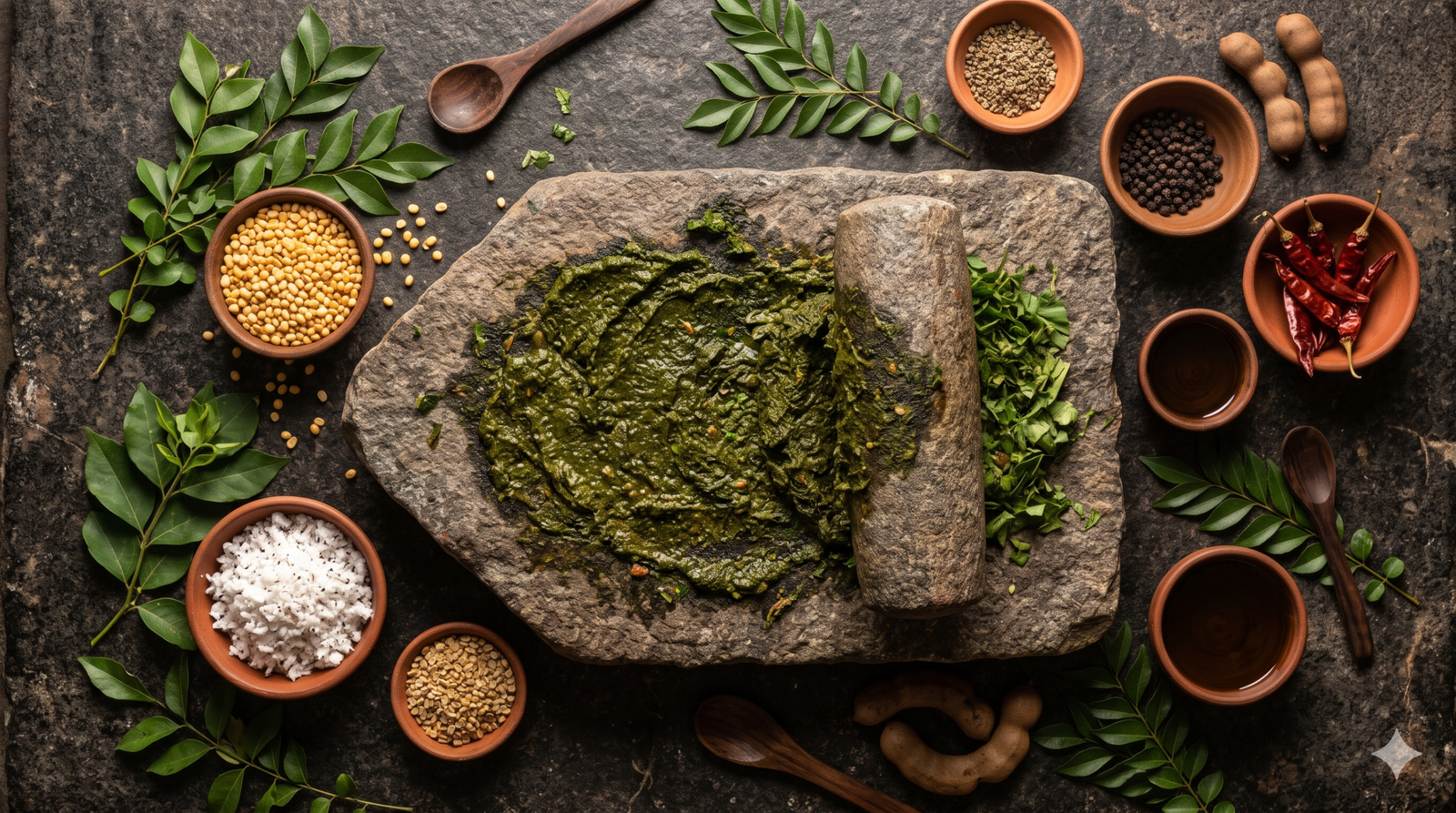
Enter Thuvaiyal (and its close family of rustic stone-ground chutneys). Unlike watery dipping sauces or sugary preserves, an authentic Tamil thuvaiyal is a dense, deeply flavorful botanical condiment crafted by grinding roasted pulses, spices, fresh coconut, and potent medicinal leaves on a traditional granite grinding stone (*Ammi Kal*).
To an outside observer, a dollop of deep green thuvaiyal served alongside hot rice and a spoonful of cold-pressed gingelly (sesame) oil looks like simple comfort food. To the traditional physician, it represents an ancient, sophisticated pharmacological insight: how to deliver concentrated therapeutic herbs in a lipid-rich matrix that the human body can readily assimilate without digestive distress.
The Culinary Science of the Mortar: Why Thuvaiyal Works
Many of the most celebrated herbs in Siddha and Ayurvedic medicine—such as Karisalankanni, Musumusukkai, Pirandai, and Vallarai—carry dominant bitter (*Tikta*) and astringent (*Kashaya*) tastes. Swallowed raw, strong bitter principles can occasionally provoke gastric dryness (*Vatha*) or irritate delicate stomach linings. The ancestral kitchen bypassed this difficulty through functional food combining:
- Lipophilic Nutrient Absorption: Many critical plant constituents, including coumestans, carotenoids, and volatile terpenes, are fat-soluble. Grinding herbs alongside freshly grated coconut and serving them with unrefined cold-pressed sesame oil or ghee provides the fatty acids necessary for optimal cellular uptake.
- Slow-Roasted Legume Base (*Urad Dal*): Lightly roasting whole split black lentils adds a nutty base that coats the tongue, buffers raw botanical astringency, and supplies vegetable protein that slows gastric transit, giving the intestines more time to absorb micronutrients.
- Acidic & Pungent Counterbalance: A small marble of sun-dried tamarind (*Tamarindus indica*) and fiery dried red chilies do not just create appetizing flavor; the organic tartaric acid gently aids digestion, while capsaicin stimulates digestive secretions (*Agni*) and increases blood flow to the gut mucosa.
“Unave Marunthu teaches that medicine should never feel like punishment. When a restorative herb is balanced with roasted lentils, unrefined oil, and warming spices, the nervous system welcomes it as nourishment rather than fighting it as a bitter intrusion.”
Classic Botanicals of the Condiment Shelf
Different seasons and household needs called for different plants on the grinding stone:
1. Karisalankanni (Eclipta & Wedelia) — The Hepatic Tonic
Traditionally roasted with cumin and garlic, Karisalai thuvaiyal has been served for generations to support liver wellness, assist bile production, improve appetite, and encourage lustrous hair and clear skin from within.
2. Pirandai (Cissus quadrangularis) — The Bone & Gut Strengthener
Known for its square winged stems, Pirandai thuvaiyal is famous throughout South India as a soothing digestive tonic that clears gas, eases sluggish bowels, and supports bone and joint integrity.
3. Kariveppilai (Curry Leaf) — The Cellular Iron Pillar
Often set aside on dinner plates, whole curry leaves ground into a dark condiment deliver concentrated dietary iron, chlorophyll, and antioxidants that nurture metabolic vitality and gut microflora balance.
4. Vallarai (Centella asiatica) — The Meditative Focus Blend
Traditionally prepared for students and working thinkers, Gotu Kola thuvaiyal cools excess mental agitation while delivering triterpenoids that support memory retention, clarity, and nervous system ease.
The 10-Minute Botanical Thuvaiyal Recipe
You can recreate this authentic heritage condiment in your own kitchen using single-ingredient botanical powders:
The Kitchen Apothecary Thuvaiyal
Ingredients:
- 2 tablespoons split black gram (white urad dal)
- 1 tablespoon pure botanical powder (such as Karisalankanni, Curry Leaf, or Pirandai)
- 2 dried red chilies + 1 clove fresh garlic
- 3 tablespoons freshly grated coconut (unsweetened)
- 1 marble-sized piece of dried tamarind (or 1 tsp tamarind paste)
- 1 teaspoon cold-pressed sesame (gingelly) oil or coconut oil
- Himalayan pink salt or sea salt to taste
Preparation Method:
- Heat oil in a small skillet over medium-low heat. Add the urad dal, red chilies, and garlic. Roast gently until the lentils turn golden-brown and nutty (take care not to scorch them).
- Turn off the heat. Immediately stir in your chosen pure botanical powder and grated coconut into the warm skillet for 30 seconds to release the aromatic oils.
- Allow the mixture to cool to room temperature. Transfer to a small blender or mortar with the tamarind, salt, and just 2–3 tablespoons of water.
- Grind into a coarse, thick, velvety paste (it should hold its shape, not be runny).
- How to Enjoy: Mix a spoonful into a warm bowl of steamed basmati or brown rice, add a drizzle of cold-pressed sesame oil, and savor with your meal.
Pure Single-Ingredient Powders from Our Apothecary
Crafting authentic food medicine requires pure botanicals that have never been exposed to chemical fumigants, preservatives, or artificial flow agents:
Karisalankanni Powder
100% pure Eclipta prostrata whole-leaf powder. Sourced from native Western Ghats habitats, stone-ground in Pollachi to preserve natural plant enzymes and coumestans.
Vallarai (Gotu Kola) Powder
100% pure Centella asiatica whole-herb powder. Cleaned, shade-dried, and milled for versatile use in daily breakfast batters, herbal pastes, and mindful teas.
A Return to Living Kitchen Wisdom
True preventative wellness is not something found exclusively in sterile bottles or complex supplement stacks. It is built steadily, meal after meal, through the mindful inclusion of diverse plant botanicals at the family table.
By bringing the ancestral art of thuvaiyal into your modern cooking, you participate in an unbroken lineage of herbal intelligence: honoring the earth’s bitter, astringent gifts and rediscovering that the most potent nourishment is often the simplest thing on your plate.
Culinary Tradition & Educational Disclaimer: This article is authored for traditional culinary appreciation and educational purposes only. These statements have not been evaluated by the US FDA, FSSAI, or EFSA. Herbal preparations are intended as functional dietary choices and are not formulated to diagnose, treat, cure, or prevent any illness. Individuals with acute digestive inflammation, bleeding disorders, or those who are pregnant or nursing should consult a qualified healthcare provider before introducing new concentrated botanical preparations into their routine.