
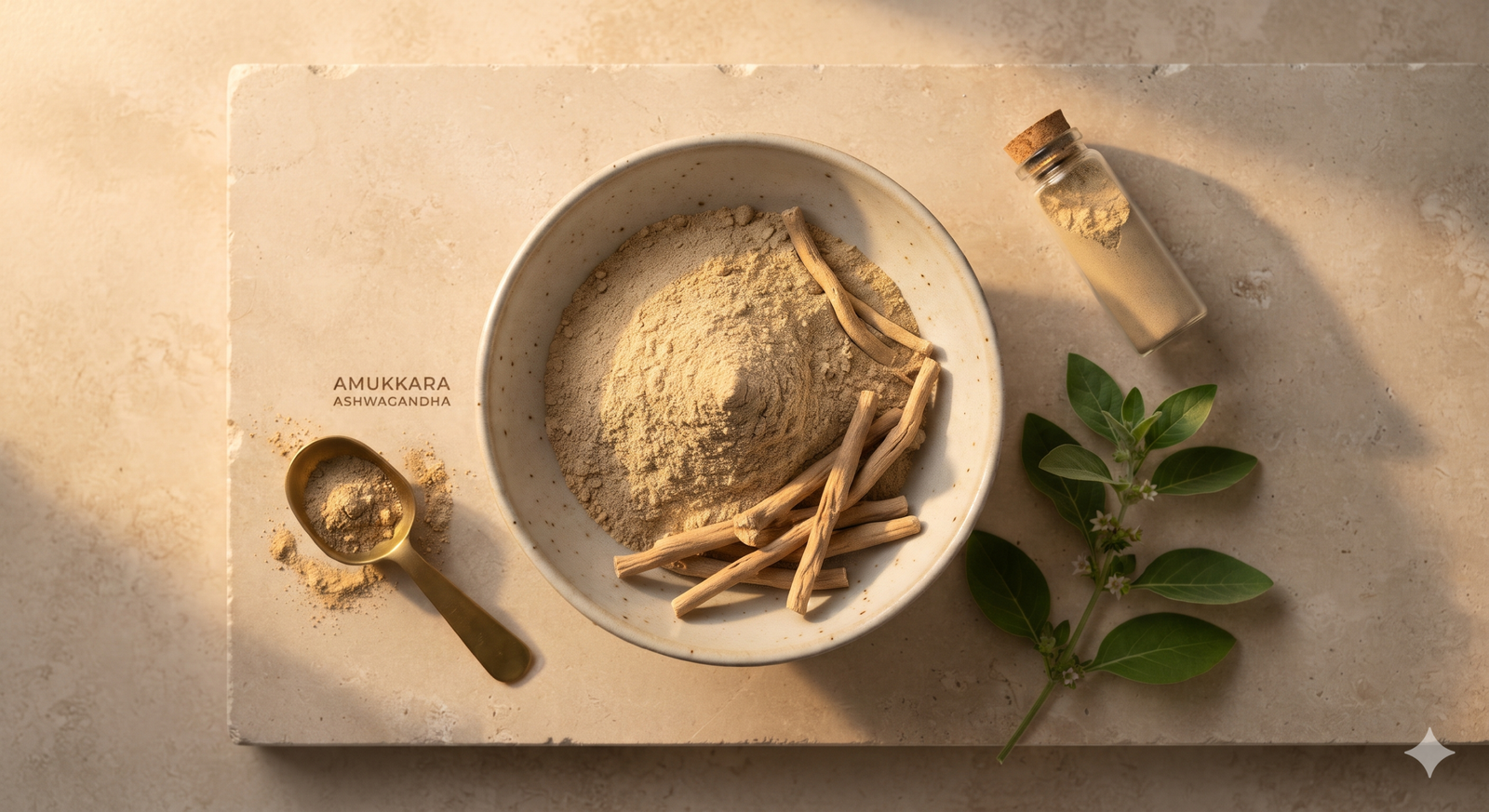
Botanical Profile
Amukkara: The Ultimate Adaptogen for Stress, Vitality and Everyday Resilience
Herbs are a cherished cornerstone of traditional home wellness, utilized for over a millennium as Rasayanas and restorative tonics designed to enhance daily strength, support calm focus, and nourish the body naturally.
One of the most celebrated roots in this lineage is Amukkara—widely known by botanists as Withania somnifera, and globally recognized as Ashwagandha or Indian Ginseng. Distinguished by its short shrub structure, yellow bell-shaped flowers, and red berries, this botanical carries a rich history rooted in rejuvenation.
The Sanskrit root name, Ashwagandha, translates literally to “smell of a horse”—reflecting the traditional belief that the root imparts vigor, stamina, and physical resilience reminiscent of a horse. Today, modern science has joined traditional Siddha and Ayurvedic practice in validating why this adaptogenic root remains an indispensable daily wellness staple.
1. Natural Stress Adaptation & Nervous System Support
Amukkara is perhaps best known for its powerful adaptogenic properties, helping the body buffer and respond appropriately to acute and chronic lifestyle stress. By supporting balanced cortisol pathways, it promotes a sense of grounded calm, reduces evening restlessness, and fosters restorative sleep without daytime grogginess.
2. Sustained Stamina & Physical Energy
Traditionally valued as a physical tonic, Amukkara supports endurance and stamina during high-demand days. It nurtures overall vitality and physical resilience, making it a favorite among active individuals seeking natural support for everyday stamina.
3. Cognitive Focus & Mental Clarity
In traditional formulations, Amukkara is classified as a Medhya Rasayana—a botanical that nurtures cognitive ease. It supports mental clarity, helps maintain focus during demanding work schedules, and brings a steady, composed energy to daily intellectual tasks.
4. Gentle Digestive & Gut Comfort
In traditional home practice, root preparations were often utilized to encourage digestive harmony, ease internal tension, and support a settled stomach rhythm when paired with warm milk or herbal decoctions.
5. Immune Support & Seasonal Resilience
As a core constituent in classic household formulations like Chyawanprash, Amukkara acts as a systemic tonic that helps the body maintain natural defenses and resilience during seasonal environmental shifts.
6. Nourishing the Reproductive System & Vitality
Classically valued as a reproductive tonic (*Vrishya*), Amukkara has long been relied upon in Siddha herbalism to nourish deep tissue layers (*Dhatus*), supporting male reproductive health, vitality, and overall systemic vigor.
7. Traditional Skin & Hair Care Traditions
Beyond internal tonics, external applications of ground Amukkara roots have historically featured in traditional routines aimed at supporting skin elasticity, hydration balance, and scalp wellness.
Experience Pure Amukkara Powder
Processed under GMP-certified conditions in Pollachi, Tamil Nadu. 100% pure shade-dried root powder, traditionally prepared for your daily wellness routines.
Shop Amukkara Powder Browse all herbsHow to Integrate Amukkara into Your Daily Routine
Amukkara is traditionally versatile and easy to incorporate into daily life:
- The Warm Evening Milk Ritual: Stir ½ to 1 teaspoon of Amukkara powder into warm dairy or plant-based milk with a touch of honey or raw unrefined sugar (*Panankarkandu*).
- Herbal Teas & Decoctions: Brew into a warming herbal infusion during high-stress seasons.
- Convenient Capsules: For those who prefer a taste-free option, pure powdered root capsules offer a seamless way to maintain consistency.
Final Thought
Amukkara earned its legendary status not through marketing trends, but through centuries of trusted, everyday household use. Whether you are seeking deeper rest, enhanced daily stamina, or a steadier anchor against modern stress, this time-tested root remains one of nature’s most dependable gifts.
Useful information about the benefits of Ashwagandha also known as amukara
Great, Thanks for this information!